Choose bangs by their line, length, and how they fall with your hair—not by a face-shape rule alone. Compare a full fringe, curtain bangs, wispy pieces, and a side-swept option, then check your hairline, glasses, and willingness to restyle them.
By the end, you can shortlist two fringe ideas alongside the option of leaving your forehead open. Your hair’s natural growth direction, dry texture, and daily routine are inputs you or a stylist need to check; a face photo cannot supply them.
Choose the Amount of Coverage You Want
Bangs change the line of hair above your face and how much of your forehead remains visible. Decide whether you enjoy an open center, a continuous edge, or a few lighter pieces. That choice is about your preferred look, not a requirement to change how a facial feature appears.
A strong horizontal edge gives you a graphic line to maintain. Parted pieces frame the sides and leave some center forehead visible; ask whether the shortest pieces can tuck away. Light, separate strands show more of the forehead, but still raise a practical question: how will they fall on an ordinary morning? You can compare the whole haircut separately from this front edge.
Keep an Open Forehead on the Shortlist
You do not need bangs to complete a haircut. If you like seeing your hairline or do not want to change the front, compare your two fringe references with an open-forehead version of your current cut.
Compare Four Fringe Shapes
Look at where each edge sits, what it leaves open, and whether you could move it away from your face. These are visual and practical differences; none belongs exclusively to one face shape.
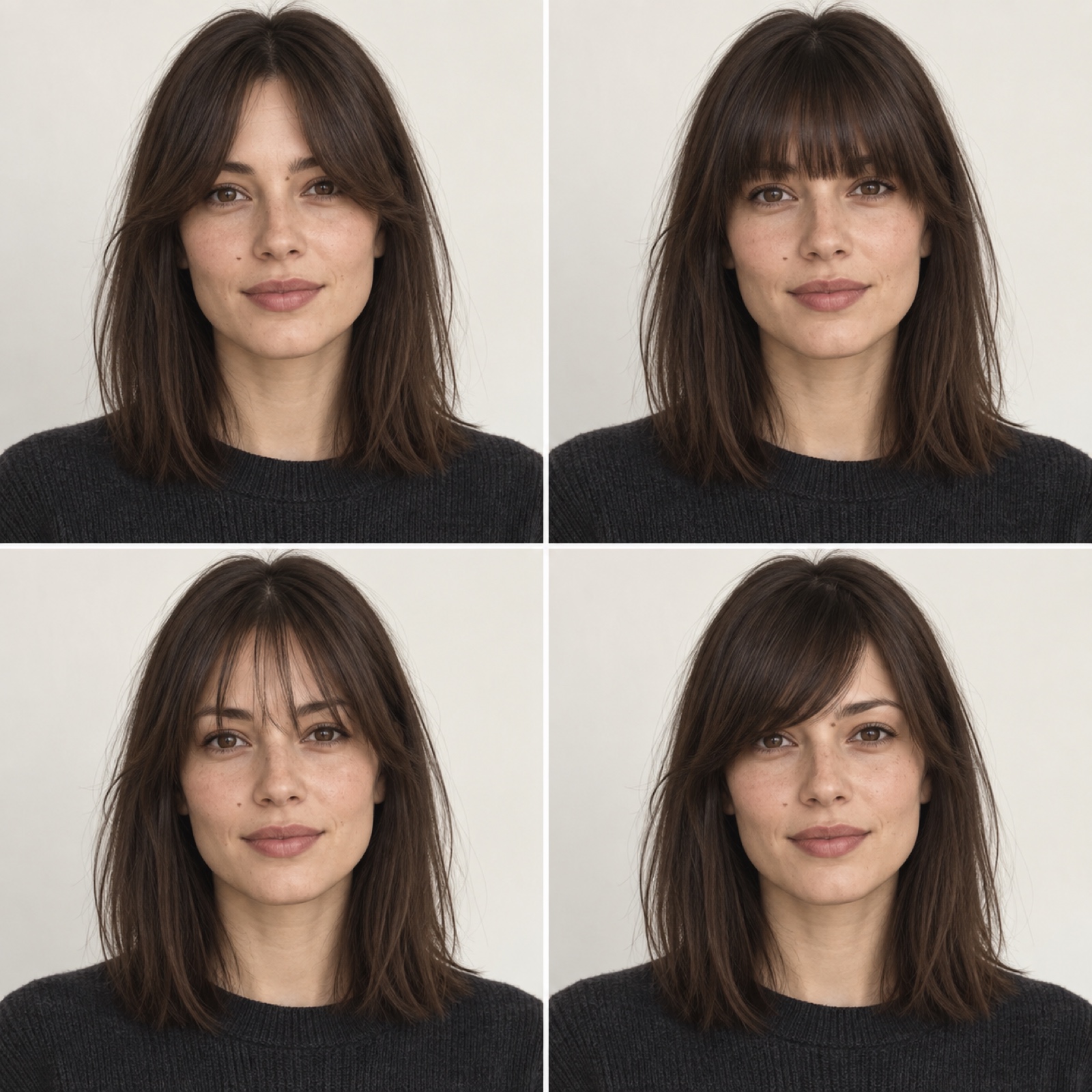
| Fringe | Front edge and openness | Moving it aside | Ask your stylist |
|---|---|---|---|
| Curtain bangs | Parted pieces make two side lines with a center opening. | Longer ends may tuck; confirm the proposed dry length. | Where will the shortest pieces end, and will they stay tucked? |
| Blunt fringe | A more continuous edge crosses the forehead. | A shorter edge may need a clip while growing out. | How will the line sit after my usual drying routine? |
| Wispy fringe | Separate strands leave more forehead visible between them. | Ask how the pieces can be pinned or blended back. | Will my density give the spacing shown in this reference? |
| Side-swept fringe | A diagonal line opens more of one side. | Longer pieces may sweep or tuck to the side. | Will my natural growth direction support this side? |
If you use a face-shape description, treat the table below as two looks to compare, not a prescription. An angle, expression, focal length, or covered hairline can change what a photograph seems to show. The face-proportions guide explains how to keep that label tentative.
| Visible outline | Two fringe directions to compare | Whole-haircut guide |
|---|---|---|
| Round | A parted opening or a deliberate blunt line across the forehead. | Round face hairstyles |
| Square | A diagonal sweep or a straight edge that repeats a defined line. | Square face hairstyles |
| Oval | Light wispy pieces or a fuller brow-level fringe. | Oval face hairstyles |
| Heart | An open center with curtain pieces or a side-swept diagonal. | Heart face hairstyles |
| Oblong | A continuous fringe line or a more open, parted version. | Oblong face hairstyles |
| Diamond | A soft side sweep or center-parted pieces near the cheeks. | Diamond face hairstyles |
Separate the Fringe From the Rest of the Cut
The same fringe can sit beside a short bob or longer layers and read differently as part of the full silhouette. Compare your preferred front edge with the length and perimeter you actually want. The shape-specific guides above cover those full cuts; this page stays with the fringe decision.
Check Natural Fall Before Choosing Length
Look at how your front hair parts and dries now. A cowlick is a small area whose growth direction differs from nearby hair; it may split or lift a proposed fringe. Ask a stylist to assess it before settling on a length. A professional discussion of cowlick styling describes temporary blow-drying techniques, not a permanent change in growth direction or a required tool purchase.
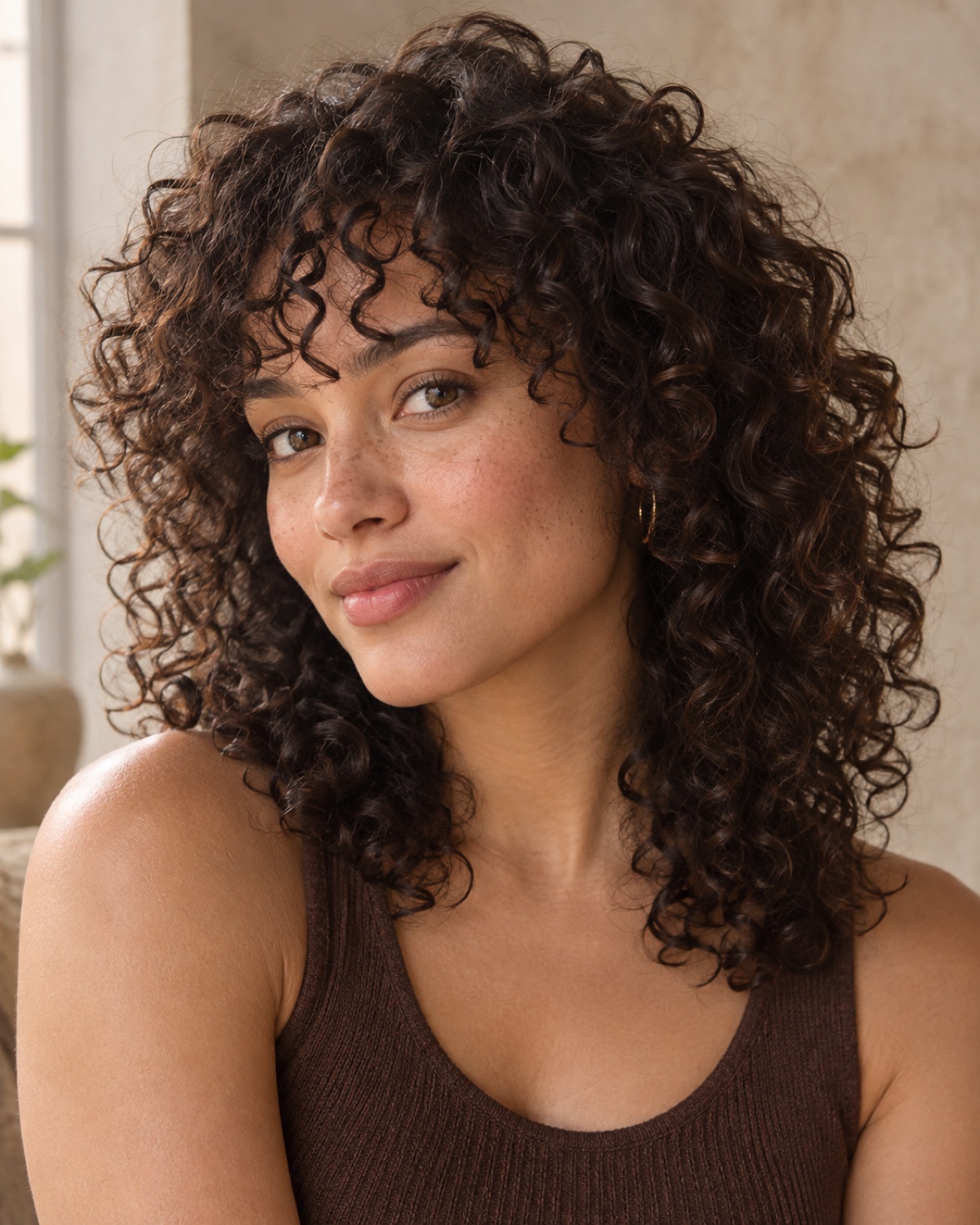
For curly hair, choose a reference close to your own dry pattern rather than using a straight-haired image as a length promise. Individual curls may finish at different points, and wet hair does not show the final dry edge. There is no universal number of inches to subtract from a fringe reference.
Ask to See the Intended Dry Endpoint
Point to where you want the shortest and longest front pieces to end when your hair is dry in its usual state. Tell the stylist whether you air-dry, diffuse, or style the front, and ask how the proposed cut would behave under that routine. The answer depends on your hair, not on a face-shape label.
Check Bangs With Glasses and Everyday Habits
Put on the frames you actually wear. Notice whether front pieces cross the top rim, meet a temple arm, or get in the way when you look up or move your hair aside. This is a comfort and styling check; for the frames themselves, check frame fit in the glasses guide.

Think about an ordinary day, too. Do you put on a hat, exercise with your hair back, or clip front pieces away to work? Write down which of those movements your fringe needs to allow. A photograph cannot reveal your habits or whether a strand against a frame feels comfortable to you.
Try a Reference Without Treating It as a Prediction
Pin your existing front pieces into a similar line or try a removable fringe if you have one. That can help you decide whether you like the amount of coverage. It cannot show exactly how a freshly cut fringe will grow, fall, or respond after washing.
Plan the Routine and the Grow-Out
Ask what each option will need in the morning, after washing, and as the edge grows. Would you need a blow-dryer or other heat styling to keep the line you like, and are you willing to use it? Find out how you could clip, part, or tuck the intermediate length. Trim timing depends on the length you choose, your hair, and the line you want to keep; agree on it with your stylist rather than assuming a universal schedule.
Shortlist two fringe options and the open-forehead choice. Use this card to take the comparison to a consultation; fill in the details from your own hair and routine.
| Record | Option A | Option B | No bangs |
|---|---|---|---|
| Dry front length | Where should each piece end? | Where should each piece end? | Which current front pieces stay? |
| Forehead openness | How much center or side stays visible? | How much center or side stays visible? | Is this the openness you prefer? |
| Daily reset | What happens after sleep or washing? | What happens after sleep or washing? | What do you already do? |
| Stylist question | How will it work with my growth pattern? | How will it work with my glasses or clips? | Could I keep the current front line? |
Know What You Are Committing To
Picture the steps you would willingly repeat, including days when you do not style the front. A clip or different part may help during grow-out, but cutting bangs is not instantly reversible. Tell the stylist which interim length you would be comfortable wearing.
Questions About Choosing Bangs
Do curtain bangs suit every face?
There is no universal guarantee. Compare the opening, dry endpoint, and movement of curtain pieces on your hair, then decide whether that line and routine appeal to you.
Can I wear bangs with curly hair?
Yes. Use your own dry curl pattern as the reference and discuss the intended endpoint with a stylist before cutting; a straight-haired photo will not predict how your curls settle.
How often will I need a trim?
Ask your stylist about the particular edge and length you choose. A fringe you want to keep at one precise point may call for a different schedule from longer pieces you plan to sweep aside.
Compare your two options: choose the relevant whole-haircut guide in the face-outline table above, then take your fringe card and dry-hair references to a stylist.