An oval label does not mean every haircut will behave the same way on your hair. Start with the length you want, then compare texture, density, fringe, and upkeep. Your routine is more useful than a promise that one face shape can wear anything.
Use this guide to shortlist two cuts and write down what to ask a stylist. Your usual dry texture, the way your front hair falls, and the time you want to spend styling are inputs you supply; a face-shape description cannot reveal them.
Replace the ‘Anything Works’ Rule With a Goal
“Oval” describes a softly tapering visible contour, not a guarantee about a haircut or an attractiveness rating. Angle, expression, or a covered hairline can change what a photo shows, so first describe your face proportions. You can still compare cuts without settling on a single label.
Choose what you want the hair to do: sit short around the ears, remain long enough to gather, make a clear edge, or show more of its natural movement. Each goal is a valid starting point. The useful question is which outline you like and can wear in your routine.
Name the Practical Limit
Do you need to tuck the front behind your ears, wear a helmet, or tie everything back quickly? Note that limit before picking a reference. It is information about your day, not something a face photo can tell a stylist.
Compare Short, Medium, and Long Outlines
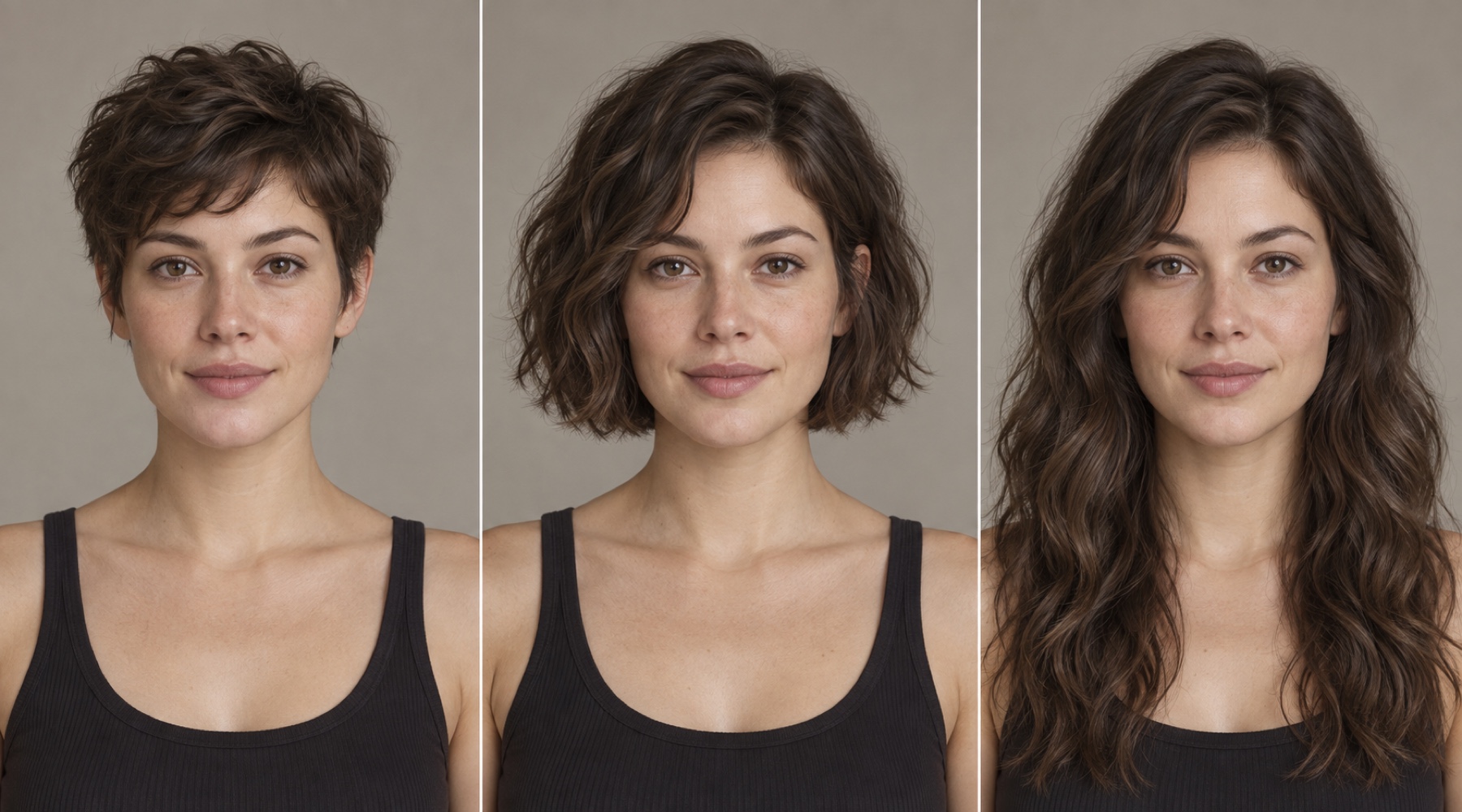
A cropped or pixie cut leaves more of the ears and neck visible. A neck-length bob or longer lob sets a more noticeable line near the lower face or shoulders. Long layers keep a longer perimeter while changing where shorter pieces fall. Compare the dry length—where the hair ends after your normal drying routine—rather than assuming one named cut works for every oval face. The general guide lets you compare haircut options across outlines and upkeep.
| Desired outline | What must stay long enough? | How to check a reference |
|---|---|---|
| Short crop or pixie | Decide whether pieces around the ears or front need to tuck away. | Find a dry front and side view; ask how the top and fringe fall after washing. |
| Bob or lob | Mark the shortest front piece and any length needed for a tie-back. | Check where the dry ends meet the neck or shoulders, not just the cut's name. |
| Long layers | Keep the perimeter at your preferred length and specify the first layer. | Compare the shortest layer and the full length on hair with a similar texture. |
The same illustrated face makes the three endpoints easier to see. It does not predict how any of these cuts will sit on your own hair.
Choose the Endpoint Before the Trend Name
Point to where you want the finished edge on your own dry hair: around the ear, at the neck, near the collarbone, or below the shoulders. Then use “pixie,” “bob,” or “layers” to discuss a reference with your stylist. The name alone leaves too much of the length unspecified.
Let Texture and Density Change the Shortlist
Texture describes the pattern of your hair; density describes how much hair grows across the scalp. Both can affect how a cut falls and how you care for it. A professional haircut guide makes the same general point about texture and daily routine, but your stylist needs to assess your actual hair and the result you want.
For curls, ask where the front pieces finish in their usual dry state. For straight hair, ask whether the intended edge remains visible without a salon finish. For waves, compare the shape after your usual air-dry or styling step. Density matters too: ask whether the planned layers keep the outline you like. No single layer plan follows from a texture label.
A straight-haired pixie reference and a curly pixie reference may call for different steps after washing. Ask what each would require on your hair instead of treating “pixie” as one daily routine.
Bring a Dry-Hair Reference
Bring at least one image of hair in a state close to how you normally wear yours, alongside any salon-finished inspiration. Compare the texture, dry length, and front view. A reference can help explain an aim; it cannot guarantee the same result on a different starting point.
Compare a Center Part, Side Part, and Fringe
A center part divides the front hair on either side of a central line. A side part shifts that line and changes which side carries more hair. Fringe covers part of the forehead and creates its own front edge. Notice those visible differences before treating any one of them as required for an oval outline.
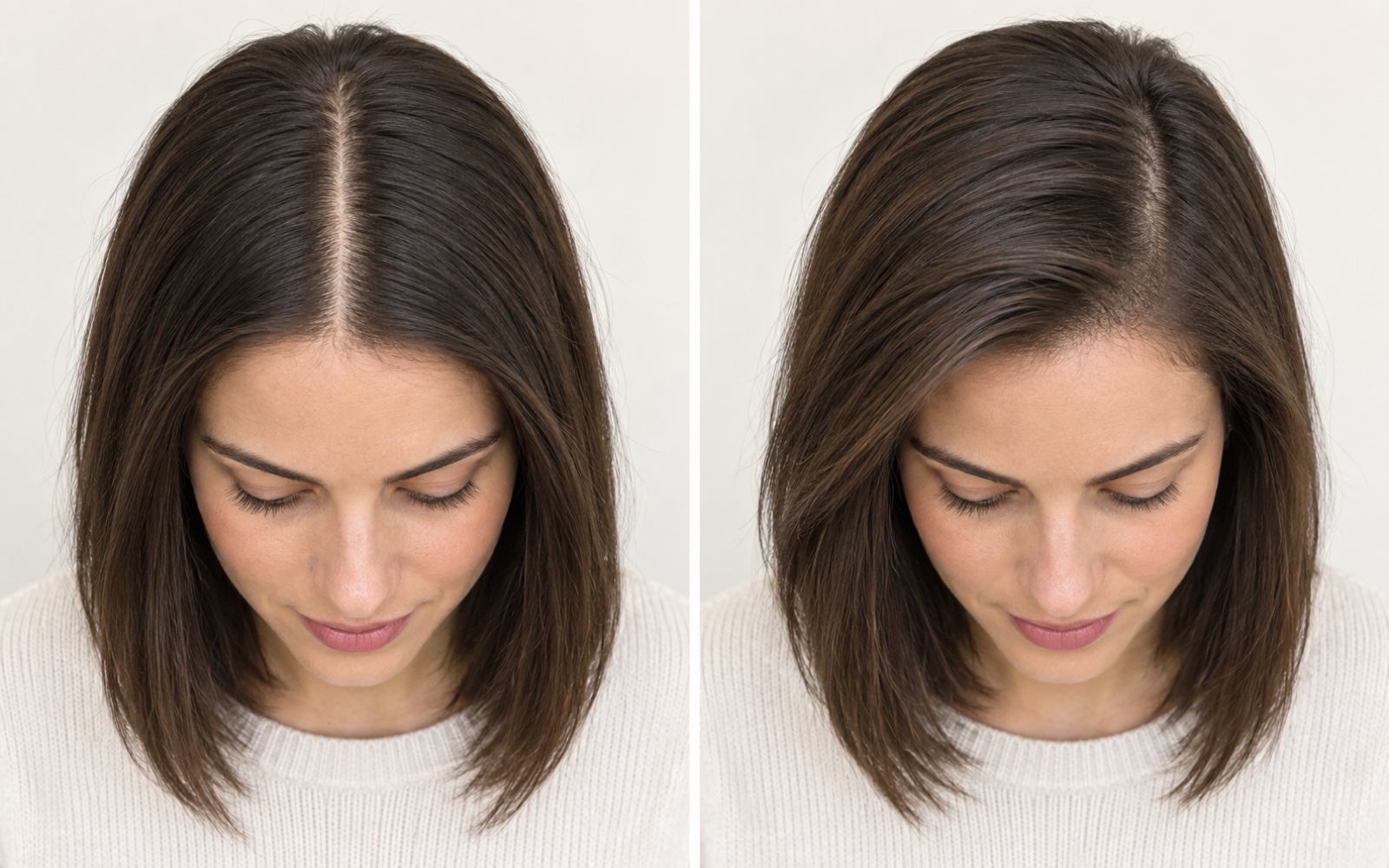
Check where your front hair naturally falls and whether you want to style a fringe regularly. You may prefer an open forehead, a side-swept front, or a graphic fringe; none is assigned by face shape. Use the bangs comparison guide to consider your fringe reference as a separate question.
Try the Part Before Changing the Cut
Move the part on your current hair and compare the front line in similar light. This reversible trial can clarify what you prefer, though it cannot show how a new cut or freshly cut bangs will fall.
Prepare a Length-and-Routine Brief
Write down your current dry length, the shortest length you would accept, your texture in its usual dry state, and the steps you actually take after washing. Add two references with different endpoints. Here is an example of a brief to bring to a stylist:
| Field | Example |
|---|---|
| Current dry length | Below the shoulders |
| Shortest acceptable length | Long enough to tuck behind the ears |
| Usual texture and routine | Wavy; usually air-dries and parts to one side |
| Two options | A neck-length bob and long layers with shorter front pieces |
Use the two options to discuss what each would mean for your dry endpoints and upkeep. The face shape analyzer homepage gathers the available guides; photo analysis is not available in this preview. A shape label need not select a single haircut for you.
Ask What the Reference Leaves Out
Ask whether a reference shows a particular styling process, added hair, or another condition you cannot see. Do not assume those details are present; the point is to learn what the image cannot establish about your likely result.
Questions About Choosing This Haircut
Does every haircut suit an oval face?
An oval label does not guarantee how a cut will behave. Compare the dry length and routine with your hair and choose the outline you prefer.
Is a middle part required?
No. Try center and side parts on your current hair, then discuss the front line and styling effort you like.
Compare your two options: use the haircut comparison guide to record each endpoint and upkeep question before a salon consultation.