With a visible angular jaw, you can repeat a strong line or choose a more textured outline. Neither approach is a correction. Compare a defined bob, a layered cut, and your preferred fringe against your texture and routine.
Use this guide to shortlist two directions and describe their dry lengths to a stylist. A face-shape name alone cannot tell you your natural wave, where your front pieces fall, whether you need to tie your hair back, or how you want to style it each day.
Start With the Line You Want to Emphasize
A visible angle along the lower face can be one part of a square-face description. It does not set a styling requirement. If the outline is hard to see because of pose, hair, expression, or camera angle, first describe your face proportions.
Choose the line you want the haircut to show: a continuous, graphic edge beside the jaw or a more separated edge with movement. Both can leave the jaw visible. Your preference matters more than a rule about what an angular outline should look like.
Keep Mixed Proportions in View
If your face looks angular and longer overall, keep both observations when comparing references. A single shape label need not decide your cut; look at the particular jaw line, hair length, and silhouette in each example.
Compare a Blunt Bob With a Textured Outline
A blunt bob gives the dry ends a more continuous line; a textured bob or shag shows separated ends and a less solid perimeter. Compare front and side views at a similar length so you can see whether the difference comes from the hair’s edge rather than a different face or pose. You can compare haircut options across lengths and upkeep in the general guide. A professional haircut discussion includes a textured shag among its square-face examples; treat it as a cut to inspect, not a required way to change the jaw.
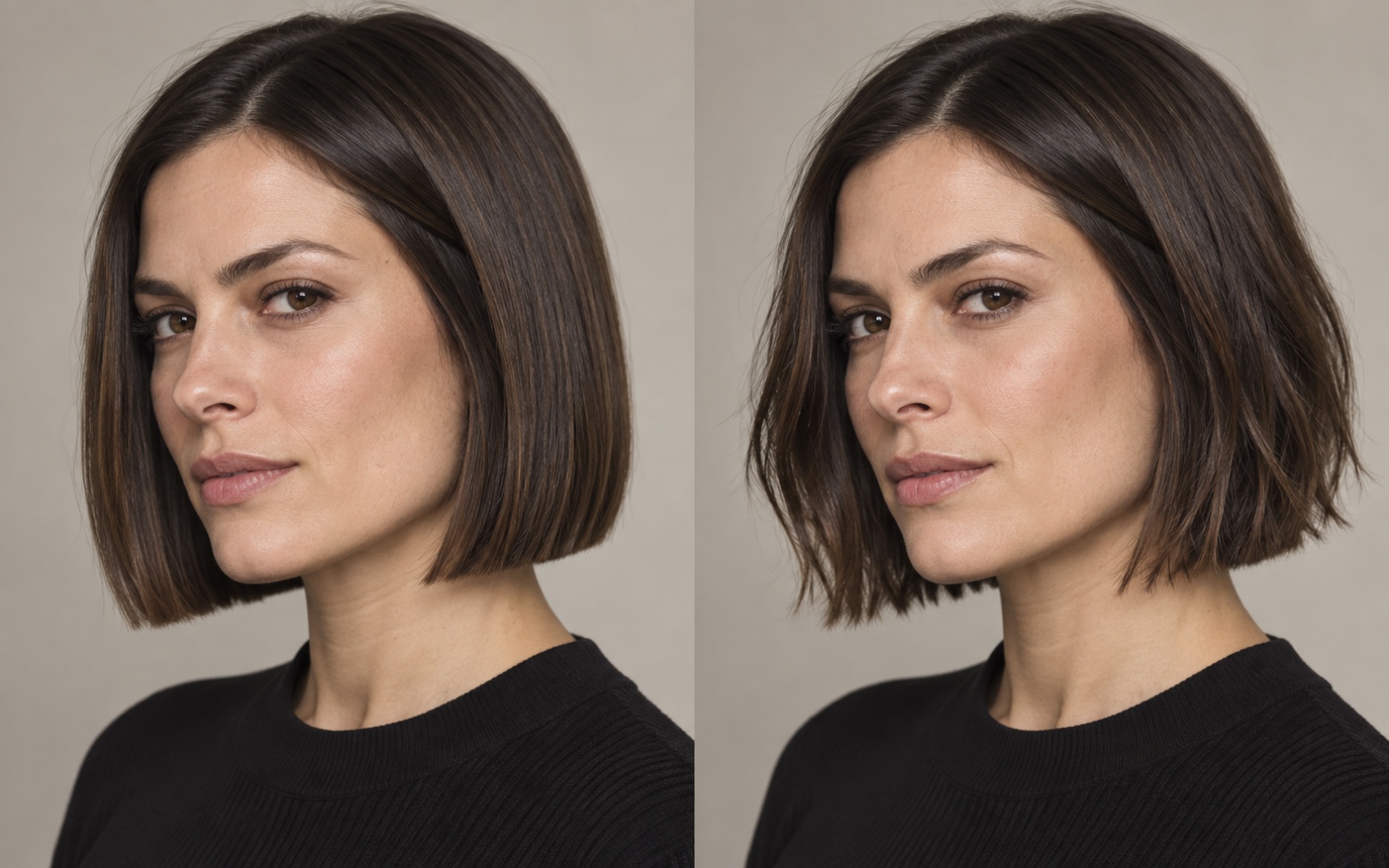
| Option | Dry end line | Where it ends | Ear tucking and routine question |
|---|---|---|---|
| Blunt bob | More continuous and defined | In this example, just below the jaw | Can the front pieces tuck behind my ears, and what will keep the line visible after my usual drying routine? |
| Textured bob or shag | Separated ends with visible movement | Ask for a reference at a comparable length | Which pieces stay long enough to tuck away, and how will this edge fall on my natural texture? |
Let the Jaw Remain Visible
The illustration keeps the jaw and face constant so you can inspect the end treatment. A clear jaw line works with either option.
Place Front Layers Deliberately
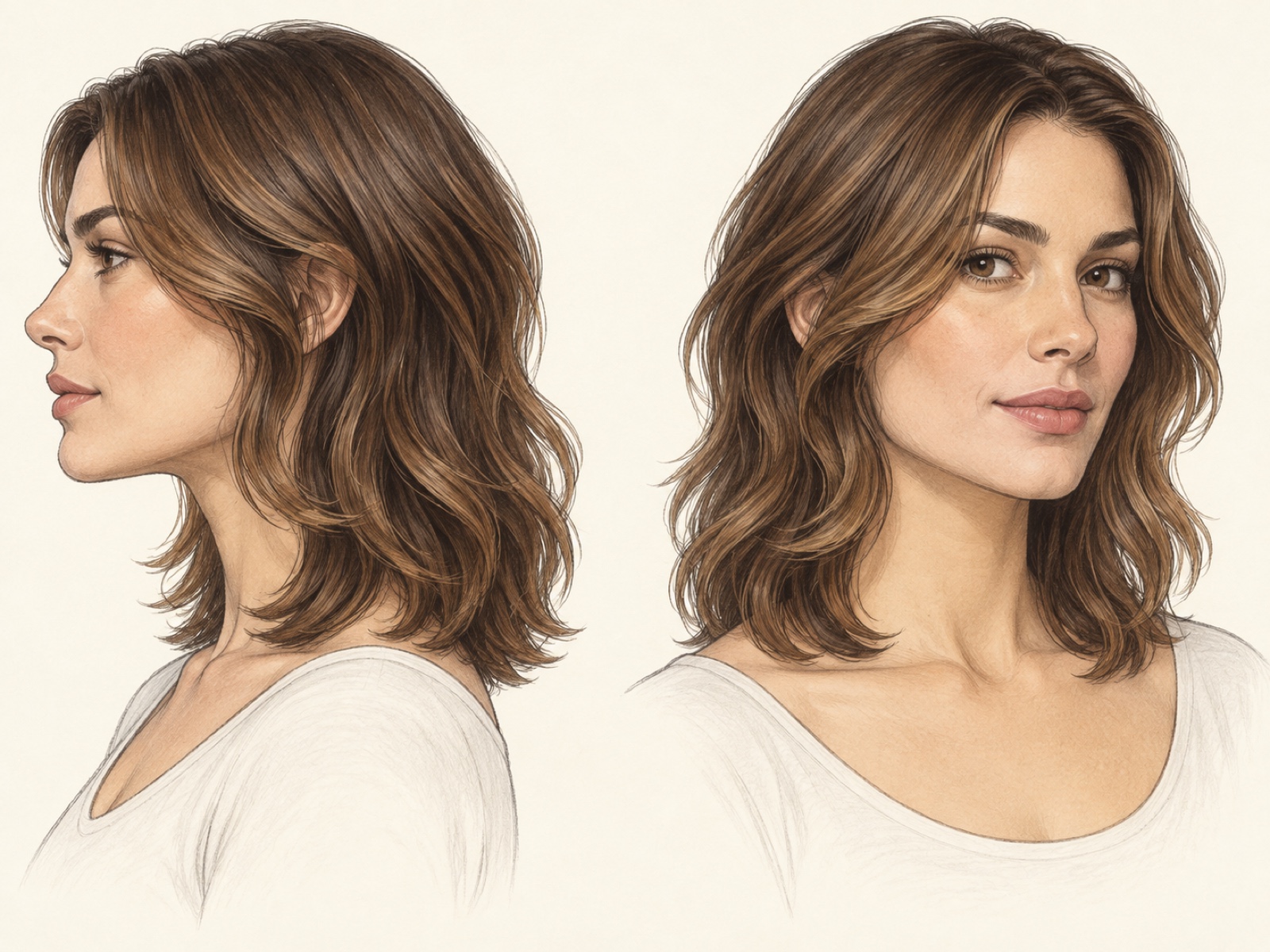
Ask where the shortest front layer will end when dry. A piece at the cheekbone, below the jaw, or nearer the collarbone frames a different part of the face, even when the overall length stays the same. Bring references that show the endpoint you mean rather than requesting “face-framing layers” alone.
Natural wave and your usual drying method may change where that front piece appears to rest. Show a stylist how your hair normally falls and compare the reference in both front and side views before agreeing on the length.
Do Not Confuse Texture With Thinning
A textured-looking edge describes what you see; it does not name the cutting technique. Ask the stylist how to achieve the outline with your hair, and leave the choice of technique to that discussion.
Compare an Open Forehead With Fringe
An open forehead keeps the hairline visible. Side-swept fringe leads the eye diagonally, while a blunt fringe creates a continuous line across the front. Choose the direction you enjoy; none is required to conceal an angular feature.
Check how the hair naturally falls, whether you wear glasses, and whether you often pull front pieces back. Those details affect the practical choice. A dedicated bangs guide is planned for a fuller comparison; here, focus on how a fringe meets the cut you have shortlisted.
Use a Reversible Reference
Before requesting a new fringe, try arranging your existing front pieces in the direction shown by a reference and discuss that line with your stylist. This can help you name a preference, but it cannot simulate the exact fall of cut bangs.
Agree on the Finished and Growing-Out Shape
Show the expected dry perimeter and point out the shortest front piece in each reference. If you need to gather your hair or tuck it behind your ears, say so before choosing a length. Ask how the outline will look as it grows beyond the first salon finish.
Give the stylist two concrete requests to compare: “keep a clearly defined edge” and “make the ends look more separated and mobile.” Use the look of the hair as the goal, without asking to alter the appearance of your jaw.
Write Down the Routine
Note how you actually dry and style your hair after washing, plus any step you would willingly add. Then ask which of your two references fits that routine and what each would take to maintain as it grows out.
Questions About Choosing This Haircut
Do square faces need soft layers?
No. A defined edge can be just as intentional as soft layers. Compare the dry outline you like and the routine it asks of you.
Can I choose a blunt fringe?
Yes. Check the precise line you want, the way your front hair naturally falls, and the upkeep you are comfortable with.
Compare your two options: use the haircut comparison guide to record their endpoints and upkeep, then bring both references to your stylist.